Can New Orleans Feel Free?
My first hesitation was assuming “free” meant effortless. In New Orleans, a morning of architecture and street music can cost nothing at the point of interest, yet still require careful walking, heat tolerance, and a budget for drinks or tips. The best experiences are often clustered, while crossing neighborhoods can quietly add rideshare fares and wasted time.
For three days, flexibility matters more than a packed checklist. Weather, crowd levels, and event schedules can change the value of any plan, so the strongest itinerary pairs walkable free sights with one paid backup only when conditions make wandering impractical.
Free Culture in the French Quarter
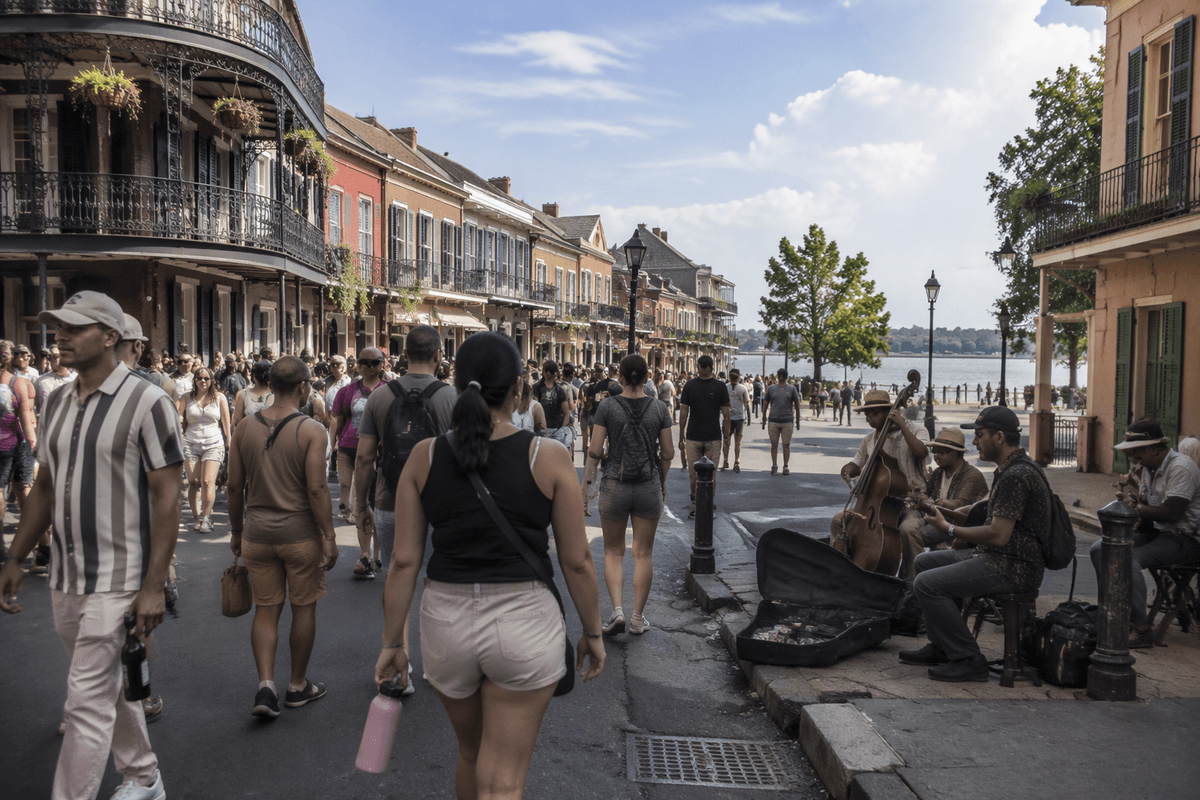
Start early in the French Quarter, when Royal Street is quieter and the iron balconies, courtyards, and weathered facades are easier to appreciate without stepping around tour groups. Walking costs nothing, but the Quarter is compact enough to encourage detours into cafés, galleries, and souvenir shops, so a loose route helps protect the budget. Jackson Square is the natural anchor: watching artists work and seeing St. Louis Cathedral from the outside are free, while entering nearby attractions or accepting every gallery invitation can quickly change the day’s cost.
By late morning, Bourbon Street becomes more useful as a brief contrast than a destination. Street performers and musicians may be entertaining, but crowds, heat, and tipping expectations make lingering less appealing than moving toward Chartres or the riverfront. Bring water rather than relying on frequent purchases, and remember that rain can turn a pleasant walking circuit into a slippery, slow one. The Quarter works best as a concentrated half-day experience; trying to stretch it across an entire day may lead to unnecessary spending simply because you are tired or looking for air-conditioning.
Parks, Waterfronts, and Outdoor Escapes
When the Quarter starts feeling crowded, move toward the riverfront rather than paying for another indoor attraction. Woldenberg Riverfront Park gives you open views, benches, and a slower walk toward the French Market, but the exposed pavement offers little shade in midday heat. It works best early or near sunset, when the Mississippi breeze makes the distance manageable and the light improves the skyline. In wet weather, however, the waterfront can become more effort than reward, especially with limited shelter.
For a greener break, City Park is more spacious and quieter than the downtown parks, with live oaks and broad walking paths that suit an unhurried afternoon. The catch is getting there: public transit takes time, while a rideshare can erase the savings of a free outing. Bayou St. John is a more practical compromise if you are already near Mid-City, offering water views without committing to a cross-city trip. Pack water and snacks, since nearby temptations can turn a low-cost walk into an expensive stop.
Free Events, Art, and Local Flavor
Free music is easiest to find when you build around a neighborhood rather than chase a specific act. Frenchmen Street can provide lively listening without a cover charge at some venues, but “free” may still mean a drink purchase, a crowded room, or an expected tip. Street performers around the Quarter are more flexible and cost nothing to enter, though the quality and timing vary. Check the day’s listings before walking across town; a missed set can turn a carefully planned evening into an expensive rideshare search.
For art and local flavor, look for gallery openings, public installations, and neighborhood markets, especially in the Arts District or along Magazine Street. These work well in daylight, when you can walk between several stops, but distances and weather make the experience less efficient than the map suggests. Markets are also budget traps if browsing becomes snacking, so decide whether you are there to observe or eat before arriving. A free community event is worth prioritizing when it is close to your lodging; otherwise, transit time and incidental purchases can outweigh the admission savings.
Making Your Nola Budget Work
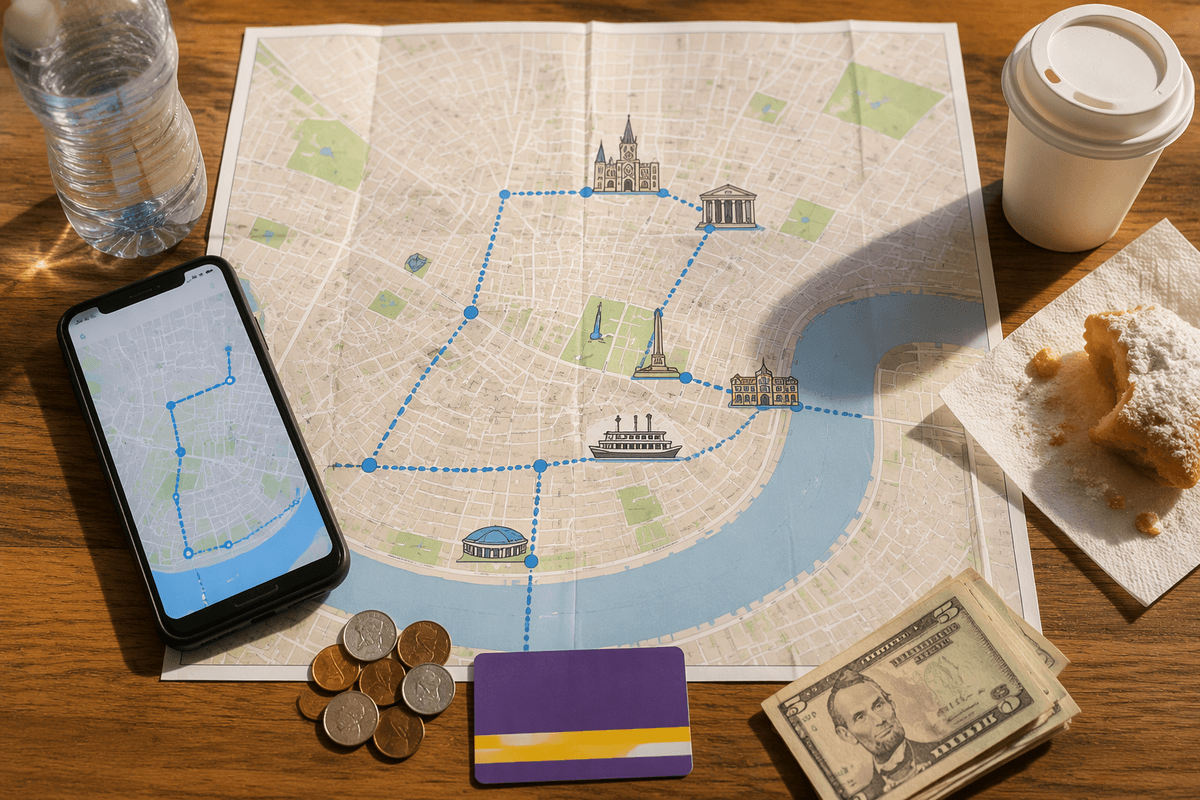
Build each day around one walkable area instead of treating every free attraction as a reason to cross town. A useful three-day rhythm is the French Quarter, then a nearby waterfront or Mid-City outing, followed by an Arts District or Magazine Street route. This reduces transit costs and leaves room for delays, rain, or the slower pace caused by heat. Public buses can save money, but limited frequency makes them poor choices when a timed event is the main plan.
Keep a small buffer for the expenses that make free plans workable: bottled water, coffees, performer tips, and an occasional indoor break. Carrying snacks helps, but not if it leaves you unwilling to support the musicians or vendors who shape the experience. When a forecast looks unstable, choose a compact neighborhood circuit rather than committing to a distant park; the admission savings are not worthwhile if weather forces an expensive rideshare home.
A Rich New Orleans Experience, For Less
A rich New Orleans weekend does not require seeing everything. Choose the neighborhoods that match the day’s weather and your energy, then stay long enough to notice the details rather than spending money to keep moving. Walking, local music, architecture, and parks can fill three days, provided you account for tips, drinks, transit, and fatigue.
The best budget plan is not the one with the most free stops, but the one that leaves room to enjoy them without financial or physical strain.