Jordaan Beyond Amsterdam’s Canal Postcard
By late morning, Amsterdam’s postcard canals can feel more crowded than charming, especially around the Anne Frank House and the main shopping streets. Jordaan offers a useful change of rhythm: its narrow lanes, leaning houses, and quieter residential corners are close enough to reach on foot, yet feel less staged. It works best when you want atmosphere rather than a checklist, though crossing the neighborhood can quietly consume an hour you might otherwise spend at a major museum.
That makes Jordaan less of a destination to “complete” than a flexible detour between plans. Visit early for calmer streets, or arrive in the afternoon when cafés and small shops are more likely to be open; rainy weather, limited opening hours, and weekend crowds can change the experience quickly. Leave room to wander, but keep one anchor—such as a market or café—so your limited sightseeing time does not disappear entirely.
Wandering Quiet Streets and Hidden Courtyards
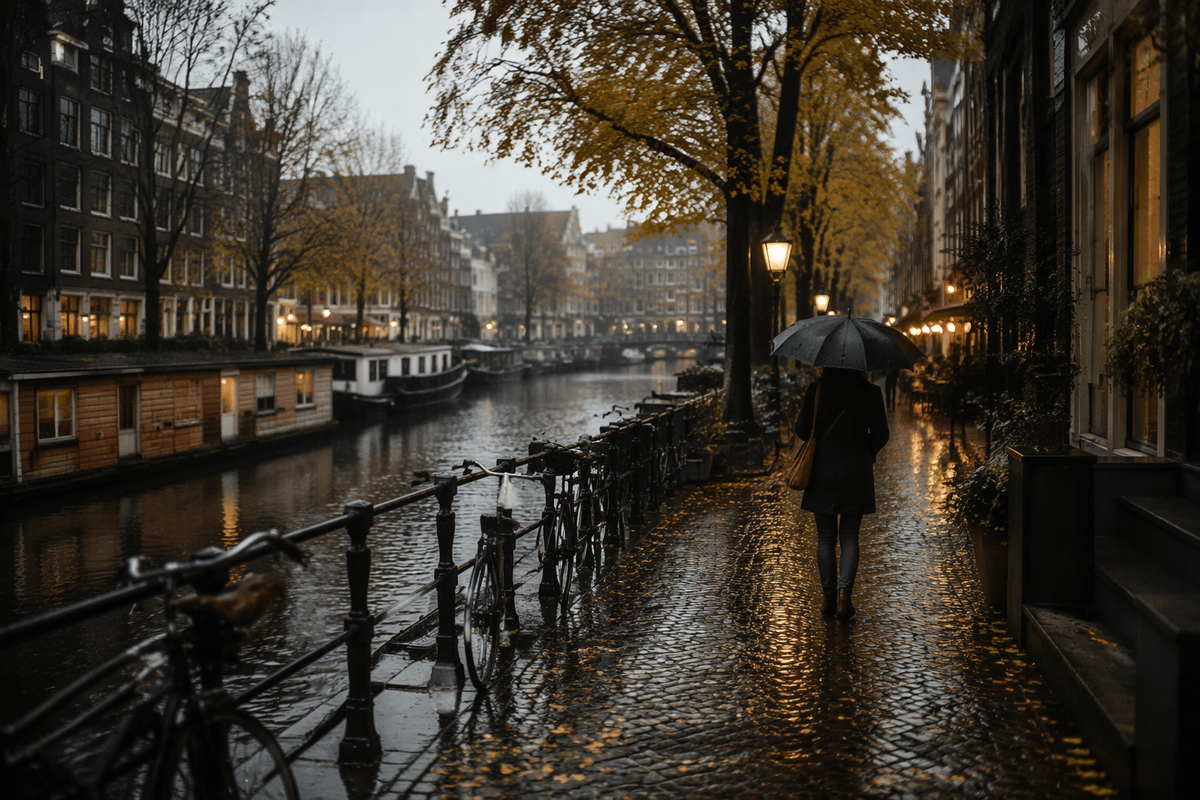
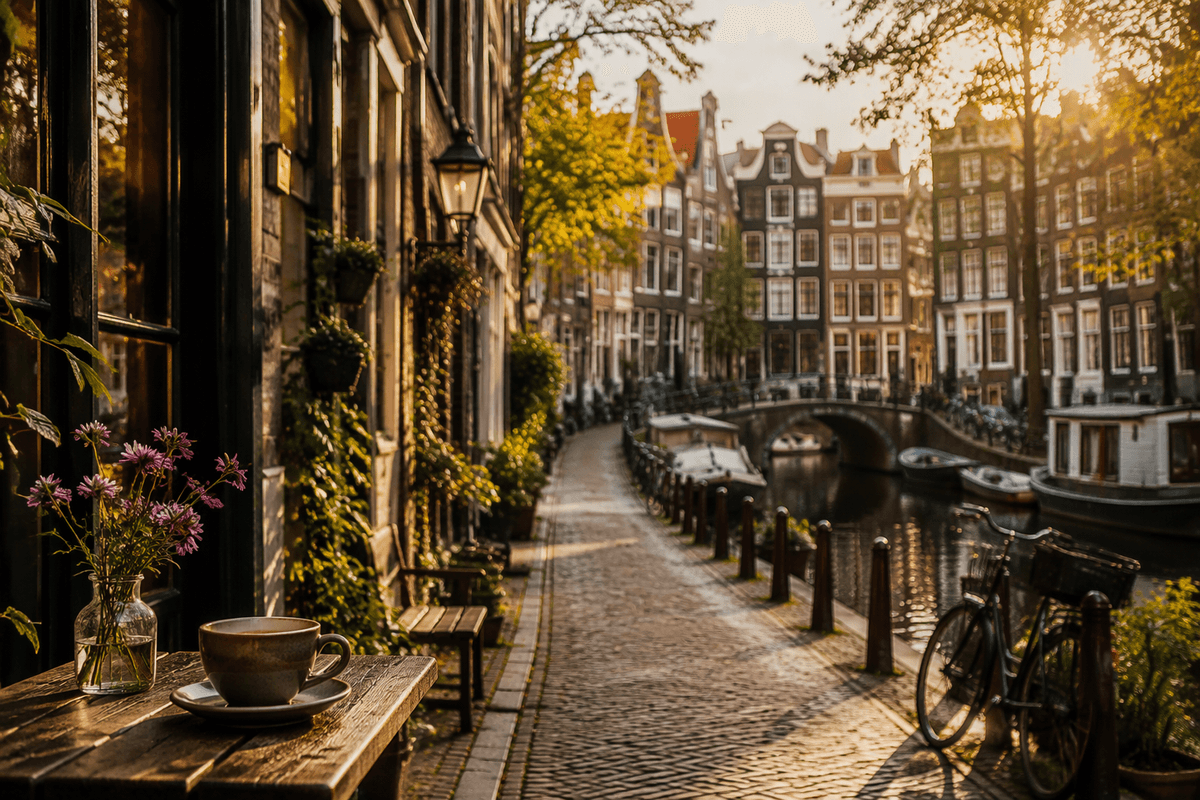
Start where the streets begin to thin, then resist the urge to follow a perfect route. From the busier canals, turn into lanes such as Bloemgracht or Egelantiersgracht, where houseboats, small bridges, and uneven brick paths reward slow walking more than quick photography. The quietest moments usually come before noon, but early mornings can mean closed cafés and shuttered shops, so this approach suits travelers who are happy to let the neighborhood itself be the main stop.
Hidden courtyards add another layer, although they are easy to miss and not always open to casual visitors. Watch for discreet entrances near older almshouses, but treat them as residential spaces rather than attractions; a locked gate or occupied courtyard is part of the experience, not a reason to force the route. Jordaan’s compact map can be misleading, too: stopping for photos, bridges, and coffee turns a short walk into two hours quickly.
On wet days, the reflective canals look beautiful, but slick paving and sudden showers make a loose loop more practical than a long cross-neighborhood ramble. Keep your route flexible, with a café or market as a halfway point, and you can shorten the walk without losing the slower, more local feeling that makes Jordaan worth the detour.
Independent Shops, Galleries, and Local Character
Jordaan’s independent shops are easiest to appreciate when you stop looking for a single “must-see” street. Around Noordermarkt and the smaller lanes near Westerstraat, you may find vintage clothing, design objects, used books, and carefully chosen homeware within a few minutes’ walk, but opening hours vary enough to disrupt a tightly planned itinerary. These shops suit travelers who enjoy browsing rather than hunting for bargains; prices can be higher than at chain stores, and the best finds are often too bulky or fragile to carry comfortably for the rest of the day.
The same relaxed judgment helps with Jordaan’s galleries. Small contemporary spaces and photography exhibitions appear between residences and cafés, offering a quieter alternative to Amsterdam’s major museums, though some are closed on Mondays or only open for limited afternoon hours. Give yourself a loose area to explore instead of collecting addresses, because gallery visits can be brief and the more memorable discovery may be a workshop, window display, or conversation with a shopkeeper. If rain is heavy, this mix of indoor stops works well; on a clear afternoon, however, spending too long inside means missing the neighborhood’s strongest feature—its ordinary, lived-in street life.
Cafés, Markets, and Everyday Amsterdam Moments
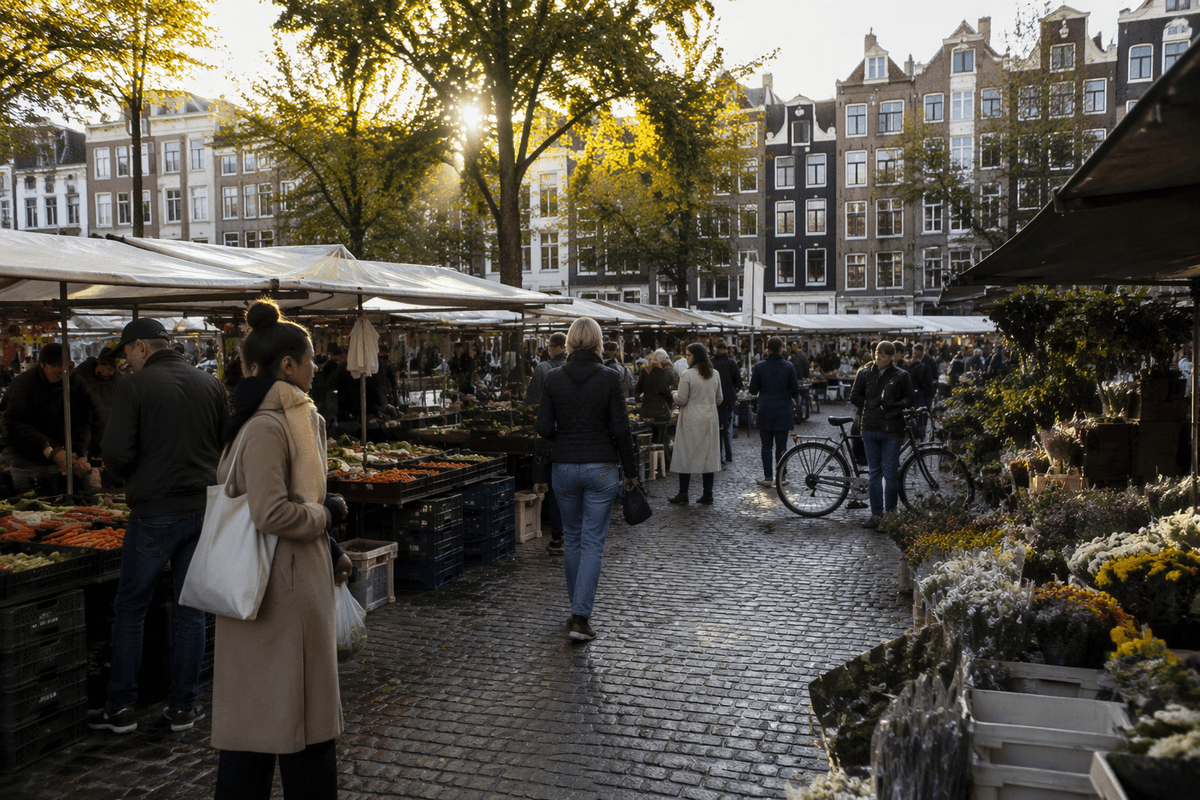
Markets give Jordaan a useful sense of everyday Amsterdam, but they reward timing more than ambition. Noordermarkt is liveliest on Saturday mornings, when stalls, bicycles, and regular shoppers crowd the square; arrive early for easier browsing, or come later for atmosphere but accept thinner selections and slower movement. The nearby farmers’ market works well as a casual breakfast stop, though prices are not always lower than a supermarket and carrying food becomes inconvenient if you still have museums ahead.
For a quieter pause, choose a café on a side street rather than one directly beside the busiest canal routes. A brown café may offer more character than polished brunch rooms, while a window seat can turn ordinary traffic—dog walkers, deliveries, and neighbors greeting one another—into the afternoon’s best observation point. Weather and opening hours matter: rain makes lingering indoors worthwhile, but a packed weekend terrace can cost nearly as much time as a formal attraction. Treat coffee or a market snack as an anchor, not a reservation, and let the next turn decide whether you continue or move on.
Let Jordaan Set Your Pace
Jordaan earns its place in a short Amsterdam itinerary when you treat it as a change of pace, not another attraction to complete. Give it two or three unhurried hours between major plans, especially on a clear morning or a rainy afternoon when cafés and galleries provide useful shelter. If your schedule is already tight, crossing the neighborhood without stopping can feel inefficient; choose one small area instead of trying to cover every canal.
The best visit usually ends without a clear finish: a quiet bridge, an unexpected shop, or a café that delays your next stop. That lack of structure is precisely Jordaan’s value, provided you can accept a little uncertainty over perfect sightseeing efficiency.